Ukraine's Defence Forces strike eight Russian oil infrastructure facilities in one week
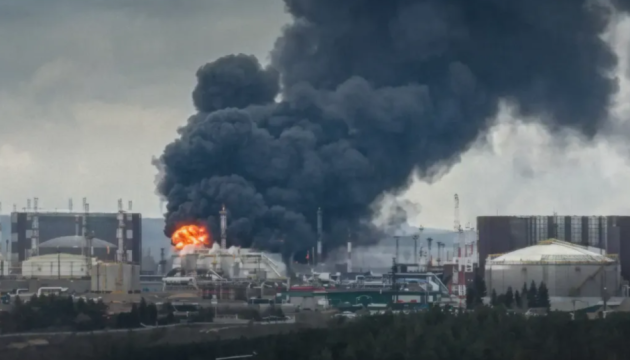
Over the past week, Ukrainian defenders carried out a series of successful strikes targeting oil refineries, fuel depots, and logistics hubs inside Russia.
 🚨Events
Photo: Ukrinform
Key points
- Eight Russian oil infrastructure facilities struck in one week
- Attacks targeted refineries in Krasnodar, Bashkortostan, and Tatarstan
- Kerch Bridge and key fuel depots damaged
Over the past week, Ukraine's Defence Forces conducted a large-scale campaign aimed at undermining the military and economic potential of the Russian Federation. Rather than isolated high-profile actions, the operations targeted a broad network of facilities supplying fuel to occupation forces. The primary focus remained on the enemy's oil refining sector and transportation infrastructure.
A series of strikes on refineries and fuel depots
On the night of November 16, Ukrainian drones attacked the Ilsky Oil Refinery in Russia's Krasnodar Krai, hitting primary processing units and the gasoline production complex. That same day, strikes hit several industrial sites in Azov, Rostov region, including the Flash Energy, Transit-Express, and Azovskaya oil depots. The following night, the Gazprom Neftekhim Salavat petrochemical complex in Bashkortostan—located approximately 1,500 kilometres from the Ukrainian border—was targeted, alongside a facility in Ufa.
The campaign continued on November 18 with another attack on the Ilsky and Afipsky refineries in Krasnodar Krai. The General Staff of the Armed Forces of Ukraine confirmed the destruction of fuel storage tanks and damage to processing units. Additionally, on November 19, the Kaleykino oil pumping station in Tatarstan was struck, which serves as a critical hub for distributing oil to domestic markets and the Druzhba pipeline system.
Impact on logistics and supply lines
In addition to fuel facilities, Russian military logistics came under fire, notably the Kerch Bridge, which suffered structural damage following attacks on November 16–17. The systematic disruption of supply chains and petroleum infrastructure creates severe challenges for sustaining Russian forces in the southern sector and temporarily occupied Crimea.
Systemic attacks on the enemy's critical infrastructure aim to undermine logistical capabilities and resource reserves.
Such operations directly affect the adversary's ability to sustain long-term combat operations by complicating fuel deliveries to the front lines. Experts note that repairing such large-scale industrial facilities requires considerable time and scarce technological resources.
Source Ukrinform — ukrinform.net/rubric-ato/4187363-ukraines-defence-forces-strike-eig… ↗
Read next
 ⚽Sport
HC Kremenchuk Defeats Ukrainian Hockey Championship Leader and Closes in on Top Spot
Kremenchuk secured a confident 5-2 home victory against league leaders Odeshchyna, climbing to second place in the standings.
 💡Tech
US military expert highlights key lessons learned from Ukrainian drone operators
US Army Chief Warrant Officer James Andreasen visited Ukraine's Killhouse drone academy twice, adopting its combat-tested training methods for US programs.
 🛡️Security
Ukraine and Sweden discuss fast-tracking Gripen fighter jet deliveries
Defense authorities of Ukraine and Sweden held detailed talks on accelerating the delivery of Gripen fighter jets and related weapons.
 🏙️City
Consequences of Russian attack in Kyiv region: casualties in Vyshneve
A retail facility was damaged in the city of Vyshneve due to a hostile attack, resulting in civilian casualties.
 🎭Culture & Sport
Numerology on the Road: Choosing Car License Plates by Date of Birth
Some drivers turn to numerology, attempting to select a 'lucky' combination of digits for their vehicle registration plate based on their birth date.
 💼Economy
Autumn Hazards: Dangerous Poisonous Plants Hiding in Parks and Gardens
While autumn nature dazzles with vibrant colors, many popular decorative plants harbor deadly toxins that pose severe health risks.