Neuroscience Breakthrough: Scientists Uncover Hidden Brain Code for Speech
UCSF researchers discovered a brain region that plans words before they are spoken, challenging long-standing theories and offering hope for speech restoration.
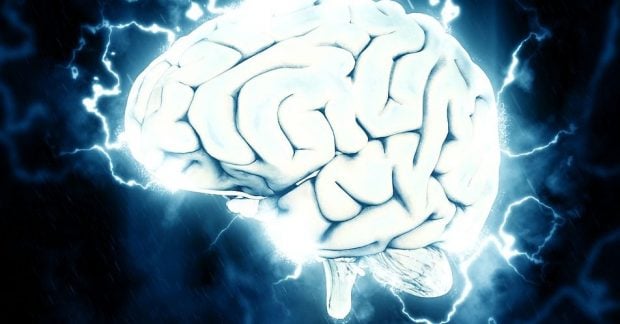 🩺Health
Photo: UNIAN
Key points
- The lpSTG region plans words 250 milliseconds before speech occurs.
- The discovery updates a 150-year-old theory regarding speech processing.
- New insights will improve brain-computer interfaces for paralyzed patients.
Scientists at the University of California, San Francisco (UCSF) have identified a specific area of the human brain that helps formulate words before a person even begins to speak. This discovery, published in the journal Science, challenges speech processing mechanisms that have been accepted for 150 years.
Rethinking Wernicke's Area
Since the 1870s, Wernicke's area was primarily associated with speech comprehension. However, the team led by Edward Chang found that the systems responsible for understanding and producing speech are much more integrated than previously thought. The study highlights the left posterior superior temporal gyrus (lpSTG), which activates about a quarter of a second before word production begins.
This region acts as a blueprint generator, encoding word characteristics such as length and syllable count. Once the plan is ready, neurons in the motor cortex take over to coordinate the movements of the mouth and vocal cords. This explains why damage to this area often impairs both the understanding and the physical ability to speak.
Advancing Medical Technology
The findings have immediate implications for neurosurgery and the development of brain-computer interfaces (BCIs). By identifying these precise speech zones, surgeons can better protect a patient's ability to communicate during complex procedures. Furthermore, the lpSTG could serve as a new target for devices designed to restore speech in paralyzed individuals.
"This discovery helps solve a long-standing mystery in neuroscience," the researchers noted.
In a proof-of-concept experiment, the team successfully decoded words from a paralyzed man's brain activity in the lpSTG. This suggests that future technology could allow for fluid, two-way communication for those who have lost their voice, potentially ending years of social isolation for many patients.
Source UNIAN — unian.ua/science/vcheni-znayshli-v-mozku-zonu-yaka-po-inshomu-vpliv… ↗
Read next
 🏙️City
Paris Denies Trump Demanded End to Military Aid for Ukraine
The Elysee Palace has labeled reports that Donald Trump demanded European leaders halt support for Kyiv as false. France reaffirms its commitment to European security int…
 💡Tech
Bloomberg Journalist Barred from China Summit Following Question on Nvidia Security Concerns
Annmarie Hordern was excluded from a high-level meeting between US, Chinese, and Russian leaders after questioning Donald Trump about Jensen Huang's loyalty.
 🚌Transport
Large-Scale Rail Modernization: Ukraine and Deutsche Bahn Prepare Joint Projects
Ukraine aims to deepen its strategic partnership with German operator Deutsche Bahn to upgrade infrastructure and rolling stock.
 ⚽Sport
Konotop Athletes Secure Gold and Silver at World Military-Sporting All-Around Championship
Athletes from the Konotop community achieved top rankings at an international tournament held in Wroclaw, Poland.
 💼Economy
Hryvnia Strengthens: NBU Sets Official Exchange Rates for November 23
The National Bank of Ukraine has recorded a strengthening of the national currency against the dollar and the euro ahead of the new working week.
 🏙️City
Germany Ties Future Financial Aid for Ukraine to Anti-Corruption Reforms
Chancellor Friedrich Merz stated at the Berlin Economic Forum that continued financial aid and investment depend on Ukraine's progress in anti-corruption and the rule of …