Orbital Nuclear Threat: Western Intelligence Warns of Russian Space Weapon Deployment
Russia is reportedly preparing to launch a nuclear-armed satellite, posing a massive threat to global satellite networks and terrestrial infrastructure.
 🛡️Security
Photo: Ukrainska Pravda
Key points
- Russia has completed the 'Sputnik-S' satellite armed with a nuclear warhead.
- A space-based nuclear blast could destroy 33% of LEO satellites instantly.
- EMP effects could cause widespread blackouts and communication failures on Earth.
- Intelligence suggests the launch could take place within the next few weeks.
Western intelligence agencies and NATO military officials have raised alarms over a new phase of space militarization. According to reports from German and U.S. intelligence, the Russian Federation has finalized preparations to launch a satellite equipped with a nuclear warhead. This move could fundamentally alter the global security architecture and threaten critical infrastructure worldwide.
According to investigations by WDR, NDR, and Süddeutsche Zeitung, the spacecraft, named "Sputnik-S," is fully constructed and currently stored near Moscow. Military experts suggest a launch could occur within the coming weeks. Once in orbit, the device would become operational almost immediately, leaving virtually no time for effective countermeasures.
Technical Risks and Global Consequences
The fallout from a potential nuclear detonation in space is described as catastrophic. Stephen Whiting, head of U.S. Space Command, recently stated that a nuclear explosion in low Earth orbit would likely disable about one-third of all satellites immediately. The remaining orbital assets would gradually fail over subsequent months due to increased radiation levels.
Beyond the destruction of satellites, such an explosion would generate a powerful Electromagnetic Pulse (EMP). Major General Armin Fleischmann of Germany’s Cyber and Information Domain Command warns of "colossal consequences for life on Earth," including massive power outages and severe disruptions to navigation and communication systems.
International Response and Denials
Western governments have been briefed on the situation. German Defense Minister Boris Pistorius and other high-ranking officials received detailed reports from the Federal Intelligence Service (BND). The presence of such a weapon in space effectively leaves Western nations vulnerable, as there are currently no reliable methods to intercept nuclear charges on stable orbits.
The Russian Embassy has categorically denied these allegations, labeling the reports as part of a "propaganda campaign." Russian diplomats claimed they have no information regarding such developments. However, the coordinated warnings from multiple independent intelligence services have prompted the international community to prepare for high-stakes security challenges.
Source Ukrainska Pravda — pravda.com.ua/news/2026/11/23/8064140/ ↗
Read next
 🚌Transport
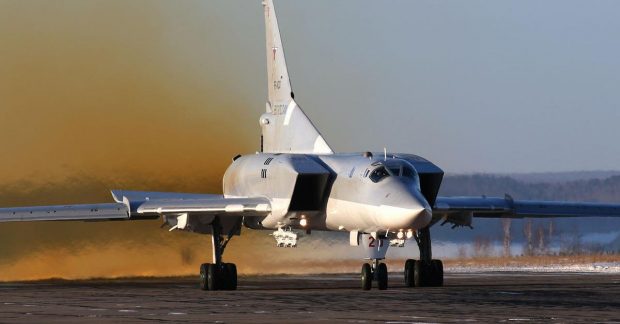
Critical Deficit: Expert Evaluates the State of Russian Strategic Aviation
Russia's military-industrial complex is unable to fully restore or manufacture strategic aircraft due to the loss of Soviet-era technologies.
 💼Economy
Ukrainian foreign exchange market: Dollar and euro rates decline at the start of the week
At the beginning of the week, foreign currency rates dropped across Ukrainian banks and exchange offices. The National Bank also strengthened the hryvnia's position.
 🚌Transport
Finland Eyes Ukrainian Defense Model: MPs Propose Peacetime Border Fortifications Against Russia
Finnish lawmakers are calling for the construction of robust defensive lines on the Russian border, citing lessons from Ukraine about the difficulty of reclaiming occupie…
 🧠AI Analysis
Electricity Restored in Rivne Region After Russian Attack
Electricity has been restored in the Rivne region after a Russian attack left over 50 settlements without power.
 🎭Culture & Sport
Autumn Rose Care: Expert Advice on Pruning
Experts explain why it is essential to wait for stable frosts before performing major pruning on rose bushes.
 🏛️Politics
Russia tests NATO's response via airspace violations, expert says
Retired Ukrainian Colonel Dmytro Kashchenko stated that incidents involving Russian missiles and drones in Poland are a way to test the Alliance's defense algorithms.